
Local Foundation Repair in San Diego County
Foundation Repair and Structural Stabilization in San Diego
Worried about your foundation? Tell us what you're seeing. Get a Free Estimate
Local Foundation Repair in San Diego County
Worried about your foundation? Tell us what you're seeing. Get a Free Estimate
Cracks in your walls, uneven floors, sticking doors, and gaps around windows can all raise questions about your home's foundation. Some changes are part of normal building movement. Others may point to settlement, moisture problems, weakened supports, or structural movement that deserves closer attention. At San Diego Foundation Repair Services, we help homeowners understand these warning signs and find a practical way forward.
We work with the foundation challenges found across San Diego County, from older homes with raised foundations to hillside properties and houses built on changing soil conditions. Whether your property needs targeted stabilization, foundation underpinning, house leveling, seismic improvements, or more extensive reconstruction, our approach starts with understanding the cause before recommending the repair.
San Diego homes are not all built alike. Coastal neighborhoods, inland valleys, hillside communities, and older residential streets can present different foundation conditions. A repair that makes sense for one house may be unnecessary or unsuitable for another. We believe good foundation work starts with careful observation, clear communication, and a repair plan that fits the actual building.
Our company story is rooted in the idea that homeowners should not have to become structural experts just to understand what is happening beneath their property. We explain what we can observe, identify where engineering evaluation may be needed, and help owners make informed decisions about the work ahead.
Foundation movement can develop slowly. A small crack may appear near a doorway, a floor may begin to slope, or a patio may separate from the house. These symptoms do not automatically mean a foundation is failing, but changes that continue, widen, or appear together deserve attention.
Our first priority is to understand the pattern of movement. We look at visible cracking, floor conditions, foundation access, drainage, and signs of soil or support problems. Where the situation requires structural calculations or engineered design, those decisions belong with an appropriately licensed professional.
San Diego County contains a variety of soil and terrain conditions. Some properties sit on expansive clay soils that change volume with moisture. Others occupy slopes, compacted fill, or sites where drainage and erosion influence ground support. Older buildings may have foundation systems that differ significantly from newer construction.
Long dry periods followed by heavy rainfall can change moisture conditions around a home. Poorly directed roof runoff, irrigation near the foundation, leaking plumbing, and uneven drainage may contribute to movement. Not every crack comes from soil movement, which is why a diagnosis matters more than a quick assumption.
Common concerns include diagonal cracks near doors and windows, stair-step cracks in masonry, sloping or bouncy floors, separation at trim, doors that no longer close smoothly, and visible movement around foundation walls or supports. A single symptom may have several explanations.
When these signs are new or worsening, documenting their location and progression can help establish whether the building is changing. We encourage homeowners to share photographs, describe when symptoms began, and mention recent plumbing, grading, or drainage changes.
Foundation repair is not one standard procedure. Depending on the condition, a project may involve reinforcing existing components, adding deeper support, correcting settlement, improving earthquake resistance, repairing damaged crawl space framing, or replacing sections that can no longer perform as intended.
Structural stabilization addresses areas where a foundation or supporting structure has lost strength, shifted, or requires reinforcement. The goal is to develop a repair appropriate to the cause and severity of the problem, rather than simply covering visible damage.
Underpinning may be considered when existing foundation support is inadequate or movement continues. Engineered pier systems can transfer building loads to more suitable supporting material when site conditions and structural design justify that approach.
Uneven settlement can cause floors to slope and building finishes to crack. Depending on the structure, a repair may include stabilizing support points, correcting selected elevations, or accepting some existing variation to avoid unnecessary damage.
Older homes may benefit from improvements to the connections between the wood framing and foundation. Foundation bolting, approved connectors, and cripple-wall strengthening can improve resistance to certain earthquake forces when properly designed and installed.
Raised foundations can develop damaged joists, weakened beams, deteriorated posts, or support problems beneath the living space. Crawl space repairs focus on the affected structural components and the conditions that caused deterioration.
Some foundations have widespread deterioration or structural limitations that make isolated repairs impractical. Replacement is a substantial undertaking, and we believe owners should understand its scope, alternatives, engineering needs, and likely disruption before proceeding.
We begin with a conversation about the property. We want to know what has changed, where the symptoms appear, and whether the home has a history of foundation repairs, water intrusion, or significant remodeling.
Next comes an evaluation of accessible conditions. We consider the visible foundation system, surrounding drainage, framing connections, and patterns of cracking or displacement. An initial inspection does not replace a structural engineering investigation when one is necessary.
Once the likely issues are understood, we explain possible repair methods and what additional investigation may be required. Some projects can be approached as localized repairs. Others need engineering drawings, permits, or coordination with other trades.
During repair work, protecting the property matters. Access, excavation, temporary support, debris handling, and restoration should be discussed before construction begins. We want homeowners to know what work is planned and why it is being done.
We serve homeowners throughout San Diego and surrounding communities, including La Jolla, Del Mar, Rancho Santa Fe, Encinitas, Carlsbad, Poway, Escondido, Chula Vista, and Oceanside.
Coastal properties may face moisture and corrosion concerns, while inland and hillside homes can present different drainage, soil, and access challenges. The location helps inform the evaluation, but the actual condition of the building determines the repair.
We do not assume every neighborhood has the same soil or foundation problems. Two neighboring houses can behave differently because of construction age, grading, drainage, remodeling, and the way loads are supported.
If you are unsure whether your address is within our service area, contact us with your neighborhood and a brief description of the issue.
A useful repair plan should answer several questions. What is causing the movement or deterioration? Is the problem active? Which structural components are affected? What are the reasonable repair options? And what work needs professional engineering or local approval?
We believe those questions deserve straightforward answers. A homeowner should understand the difference between repairing cosmetic cracking and addressing the structural condition that may have caused it.
Not every crack requires underpinning. Not every sloping floor should be lifted. Some situations call for monitoring, drainage corrections, or further investigation before structural work is appropriate. Our goal is to recommend a path that makes sense for the evidence available.
Foundation projects can feel disruptive because much of the work happens beneath or around the house. We explain access needs, anticipated construction stages, and factors that may change the scope once concealed conditions are exposed.
Older San Diego homes often contain distinctive construction details. We take those conditions seriously when planning access and repairs. Stabilizing a building should not involve unnecessary disturbance to sound components.
Consider getting professional guidance when cracks are widening, floors are becoming noticeably uneven, foundation walls appear displaced, or structural supports show visible deterioration. Recent water damage, excavation near the property, and significant changes after an earthquake also warrant attention.
If a building appears at immediate risk of collapse, has rapidly worsening structural movement, or has damaged gas or electrical services, avoid the affected area and contact the appropriate emergency or utility service before arranging routine repair work.
For less urgent concerns, an evaluation can help separate ordinary maintenance issues from conditions that need structural attention. Photographs, previous inspection reports, and a short history of the problem are useful starting points.
Foundation work is a significant decision. You deserve to understand the problem, the proposed solution, and the limitations of any repair before committing to construction.
San Diego Foundation Repair Services is here to help homeowners move from uncertainty toward a practical plan. Whether you are investigating your first foundation crack or considering a major structural repair, we welcome the conversation.
More about us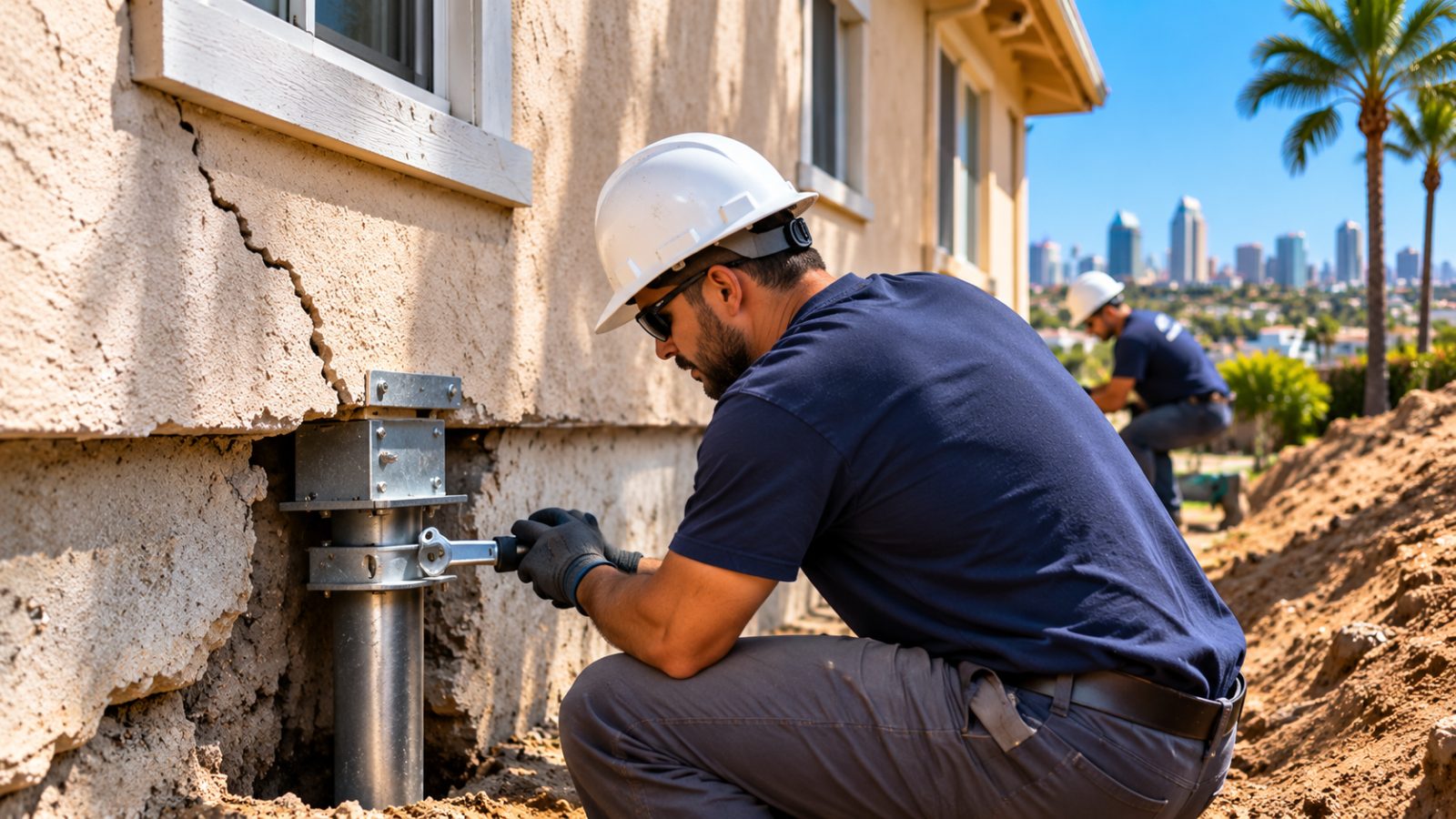
We offer six foundation and structural repair services, with recommendations based on the condition of the property and the repair it actually needs.
Address foundation movement, structural cracking, and weakened supports with repairs planned around your home's actual condition.
Learn more →Improve foundation support where settlement or unsuitable bearing conditions call for engineered underpinning and pier systems.
Learn more →Investigate uneven settlement and sloping floors, with stabilization and leveling options suited to the structure.
Learn more →Strengthen vulnerable foundation connections and selected framing components in older homes with appropriate seismic retrofits.
Learn more →Repair damaged crawl space beams, joists, posts, and supports while addressing conditions that contribute to deterioration.
Learn more →Plan major foundation replacement when deterioration or structural limitations make localized repairs unsuitable.
Learn more →Our primary service area is San Diego County, including San Diego, La Jolla, Del Mar, Rancho Santa Fe, Encinitas, Carlsbad, Poway, Escondido, Chula Vista, and Oceanside. We work with the different foundation styles and site conditions found throughout these communities.
From older raised-foundation homes to slab-on-grade houses and hillside properties, each building deserves an individual assessment. Tell us where your property is located and what concerns you have noticed.
See all service areas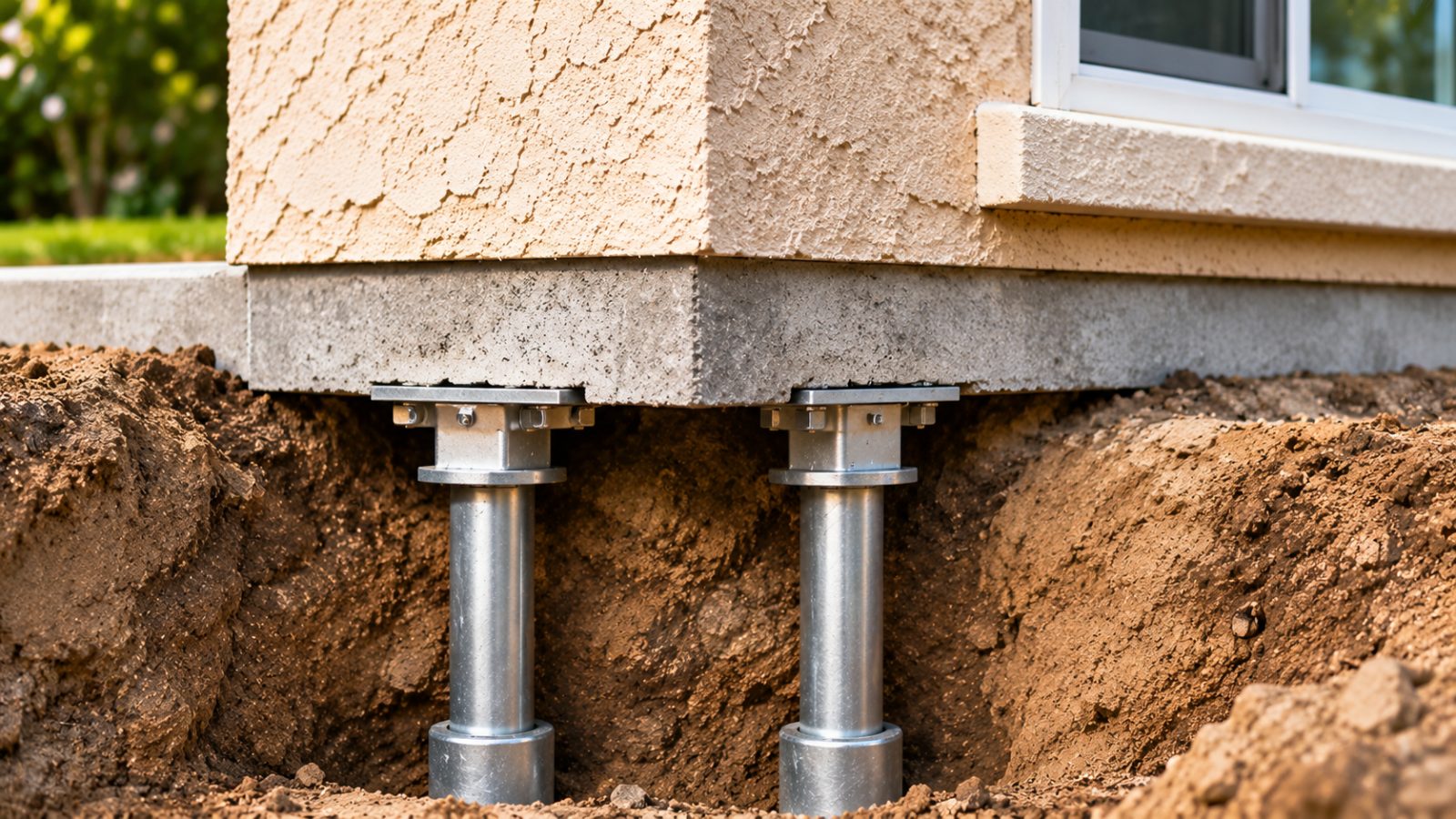
We focus on understanding the movement or deterioration before discussing repair methods. The right solution depends on the building, not just the visible crack.
We explain structural concerns in everyday language and distinguish observations from issues that require engineering confirmation.
We consider the varied construction styles, drainage conditions, terrain, and earthquake concerns found around San Diego County.
We discuss targeted repairs where appropriate and larger structural solutions when the condition calls for them.
We consider access, protection of existing finishes, excavation, and cleanup as part of responsible project planning.
We help homeowners understand the steps from initial evaluation through repair planning, approvals where required, and construction.
Look for widening cracks, changing floor slopes, sticking doors, and visible foundation movement. These signs can have several causes, so a professional evaluation is the best way to understand whether structural repair is necessary.
Costs depend on the foundation type, severity of movement, access, engineering requirements, and repair method. Small localized work may cost much less than underpinning or foundation reconstruction. A property-specific estimate is more useful than a generic price.
Many settlement problems can be stabilized using methods appropriate to the structure and soil conditions. Restoring a building to its original elevation is not always necessary or advisable. The goal is to address the structural problem without causing avoidable additional damage.
Some older wood-frame homes have foundation connections or cripple walls that can benefit from seismic strengthening. The need depends on the home's construction and existing connections. An assessment can identify suitable improvements.
Hairline cracks are not always structural emergencies, but widening, displaced, or leaking cracks deserve prompt evaluation. If movement appears sudden or severe, keep clear of the affected area and seek urgent professional assistance.

Tell us about your foundation concern and we'll help you identify a sensible next step.
Free — no obligations